Trivia About International Cuisines
Top 10 Most Popular Ethnic Cuisines in US. Dora Mekouar May 18, 2015. More Americans are interested in sampling Moroccan food, such as this platter of couscous. (Photo by hjw223 via Flickr) The United States is a great melting pot and evidence of our multicultural roots can often be found in the food we eat. In this foodie article, I have provided more than 100 food trivia questions. They are mouth-watering, fun, and interesting. Not only that, but they will also help you in finding the traditional as well as the official food of different place while traveling. Have a great fun! 100+ Food Trivia Questions and Answers.
Steamed whole with roe inside. Sliced ginger and spring onion is usually spread on top.Chinese society greatly valued, and developed an extensive study of the subject based on its. Chinese culture initially centered around the.
The first domesticated crops seem to have been the and varieties of, while was cultivated in the south. By 2000 BC, wheat had arrived from western Asia. These grains were typically served as warm soups instead of baked into bread as in Europe. Nobles hunted various wild game and consumed, pork and as these animals were domesticated. Grain was stored against famine and flood and meat was preserved with salt, vinegar, curing, and fermenting. The flavor of the meat was enhanced by cooking it in animal fats though this practice was mostly restricted to the wealthy.By the time of in the, gastronomy had become a high art. Confucius discussed the principles of dining: 'The rice would never be too white, the meat would never be too finely cut.
When it was not cooked right, man would not eat. When it was cooked bad, man would not eat. When the meat was not cut properly, man would not eat. When the food was not prepared with the right sauce, man would not eat. Although there are plenty of meats, they should not be cooked more than staple food. There is no limit for alcohol, before a man gets drunk.'
During 's, the empire expanded into the south. By the time of the, the different regions and cuisines of China's people were linked by major and leading to a greater complexity in the different regional cuisines. Not only is food seen as giving ', energy, but food is also about maintaining yin and yang. The philosophy behind it was rooted in the and: food was judged for color, aroma, taste, and texture and a good meal was expected to balance the (', warm, cool, and ') and the (pungent, sweet, sour, bitter, and salty).
From early times, but in cooking was added in the form of soy sauce, and not at the table. Main article:A number of different styles contribute to Chinese cuisine but perhaps the best known and most influential are, (specifically ). These styles are distinctive from one another due to factors such as availability of resources, climate, cooking techniques and lifestyle. One style may favour the use of garlic and over chili and spices, while another may favour preparing over other meats.
Favours cooking techniques such as and, while employs.Based on the raw materials and ingredients used, the method of preparation and cultural differences, a variety of foods with different flavors and textures are prepared in different regions of the country. Many traditional regional cuisines rely on basic methods of such as,. Staple foods.
Staple foods in China: Rice, breads and various kinds of noodles. Rice is a major for people from rice farming areas in southern China., usually, is the most commonly eaten form. People in southern China also like to use rice to make congee as breakfast.
Rice is also used to produce,. ('sticky rice') is a variety of rice used in specialty dishes such as lotus leaf rice and glutinous rice balls.Wheat In wheat-farming areas in, people largely rely on -based food, such as, (bread), (a kind of Chinese ), and (a type of steamed buns). Main article:come dry or fresh in a variety of sizes, shapes and textures and are often served in soups or fried as toppings. Some varieties, such as Shou Mian (寿面, literally noodles of longevity), is an avatar of long life and good health according to Chinese traditions. Noodles can be served hot or cold with different toppings, with broth, and occasionally dry (as is the case with mi-fen). Noodles are commonly made with rice flour or wheat flour, but other flours such as are also used in minor groups.Soybean products.
Stir-fried with (fermented black soybeans) in style.is made of and is another popular food product that supplies protein. The production process of tofu varies from region to region, resulting in different kinds of tofu with a wide range of texture and taste.
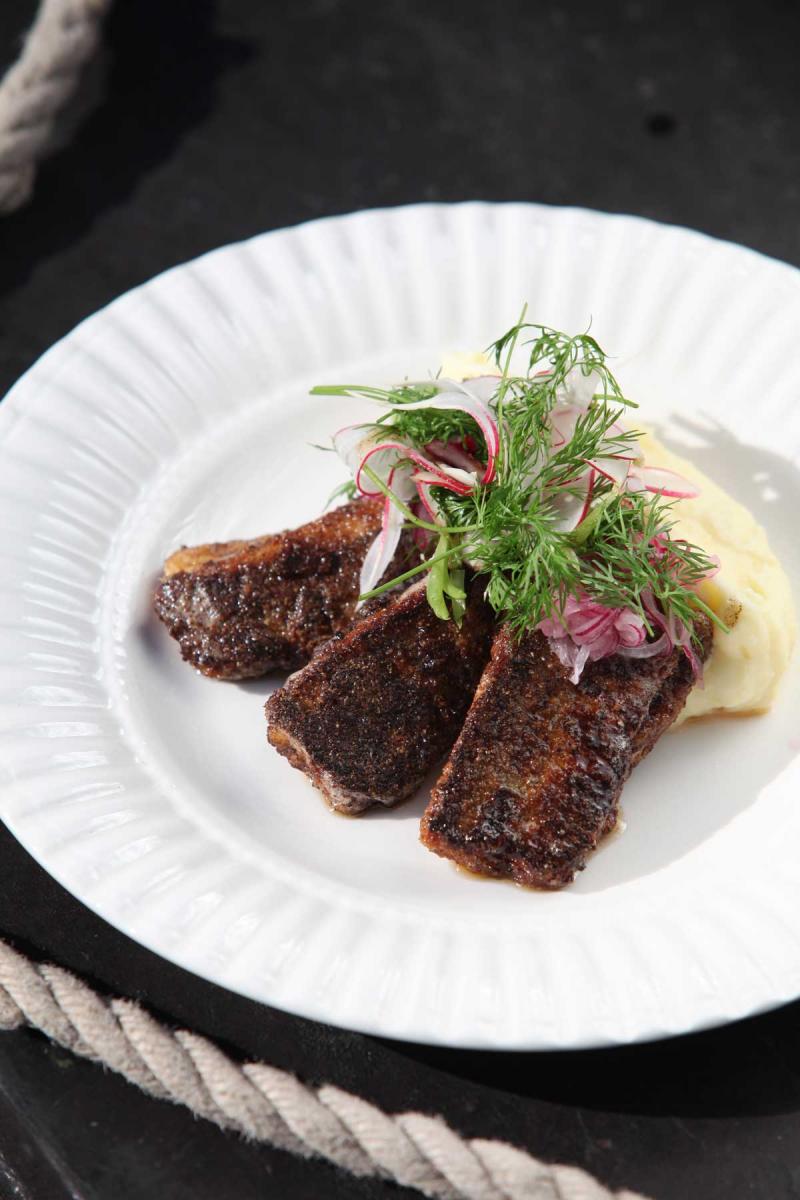
Other products such as, and fermented are also important in Chinese cooking.There are many kinds of soybean products, including, smoked tofu, dried tofu, fried tofu and so on.is fermented tofu. Like or, it has a very distinct, potent and strong smell, and is an acquired taste. Hard stinky tofu is often deep-fried and paired with soy sauce or salty spice.
Soft stinky tofu are usually used as a spread on steamed buns.is another type of fermented tofu that has a salty taste. Doufuru can be pickled together with soy beans, or chili to create different color and flavor. This is more of a pickled type of tofu and is not as strongly scented as stinky tofu. Doufuru has the consistency of slightly soft blue cheese, and a taste similar to Japanese, but less salty. Doufuru can be used as a spread on steamed buns, or paired with.Vegetables Apart from vegetables that can be commonly seen, some unique used in Chinese cuisine include, pods, Chinese, Chinese and straw. Other vegetables including, pea vine tips, water chestnuts, and are also used in different cuisines of China.Because of different climate and soil conditions, cultivars of green beans, peas, and mushrooms can be found in rich variety.A variety of dried or pickled vegetables are also processed, especially in drier or colder regions where fresh vegetables were hard to get out of season.Herbs and seasonings. Ingredients of (Five spice powder) are Sichuan peppercorn, cloves, cinnamon, fennel seeds, and star anise.such as fresh root, and are widely used in many regional cuisines., and are also used in different regions.To add extra flavors to dishes, many Chinese cuisines also contain dried Chinese mushrooms, dried baby shrimp, dried tangerine peel, and dried Sichuan chillies.When it comes to, China is home to soy sauce, which is made from fermented soybeans and wheat., clear rice vinegar, chili, Chinkiang black rice vinegar, and furu (fermented tofu) are also widely used.
A number of sauces are also based on fermented soybeans, including, ground bean sauce and yellow bean sauce.Desserts and snacks. Are steamed buns containing savory or sweet combinations of meat, vegetables, mushrooms, traditionally associated with breakfast.Many types of street foods, which vary from region to region, can be eaten as snacks or light dinner. Are an often-consumed snack in Southeast China.Dairy products Chinese in earlier dynasties evidently drank milk and ate dairy products, although not necessarily from cows, but perhaps (fermented mare's milk) or goat's milk.Many Chinese have until recently avoided milk, partly because pasturage for milk producers in a monsoon rice ecology is not economic, and partly because of the high rate of. As such the use of dairy products in Chinese cuisine has historically been rare, with regional exceptions such as the ' dessert in Guangdong Province or the Rubing (milk cake) cheese in. Today is commonly available and popular throughout China. Cold dishes. Main article:As well as with dim sum, many Chinese drink their tea with snacks such as nuts, plums, dried fruit (in particular ), small sweets, melon seeds,.
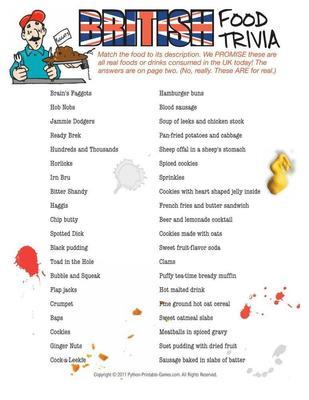
German Food Trivia
China was the earliest country to cultivate and drink tea, which is enjoyed by people from all social classes. Tea processing began after the and.The different types of Chinese tea include black, white, green, yellow, oolong, and dark tea. Chinese tea is often classified into several different categories according to the species of plant from which it is sourced, the region in which it is grown, and the method of production used. Some of these types are, black tea, scented tea,. There are four major regions:, and the southwestern region.
Well known types of green tea include,. China is the world’s largest exporter of green tea.One of the most ubiquitous accessories in modern China, after a wallet or purse and an umbrella, is a double-walled insulated glass thermos with tea leaves in the top behind a strainer.Alcoholic beverages.
Main article:The importance of ( lit. 'white liquor') in China (99.5% of its alcoholic market) makes it the most-consumed alcoholic spirit in the world. It dates back to the introduction of distilling during the; can be made from wheat, corn, or rice; and is usually around 120 proof (60% ABV). The most ubiquitous brand is the cheap, but is the premium baijiu. Other popular brands Kang, Lu Zhou Te Qu, and Wu Liang Ye.( lit.
'yellow liquor') is not distilled and is a strong (10–15% ABV). Popular brands include,. Herbal drinks. (noodles with bean paste) is a traditional northern Chinese dish. It has been spread to South Korea and known as.Where there are historical immigrant Chinese populations, the style of food has evolved and been adapted to local tastes and ingredients, and modified by the local cuisine, to greater or lesser extents.
This has resulted in a deep Chinese influence on other national cuisines such as,. There are also a large number of forms of, often popular in the country in question. Some, such as have become popular internationally.Deep fried meat combined with sauce as a cooking style receives an enormous preference outside of China. Therefore, many similar international Chinese cuisines are invented based on sweet and sour sauce, including Sweet and sour chicken (Europe and North America), Manchurian chicken (India) or (South Korea). The was inspired by Chinese sweet and sour flavors.Apart from the host country, the dishes developed in overseas Chinese cuisines are heavily dependent on the cuisines derived from the origin of the Chinese immigrants.
In, the dishes derive primarily from while is strongly influenced. The large population having Chinese ancestors in the United States operates many restaurants, has developed distinctive dishes (such as ) based originally on Cantonese cuisine, while those are not popular among Chinese-American people.,.,. Cha chee kai, bangamary ding.,.,.,.,.,.,.,.,Dining etiquette. Main article:The Chinese dining etiquette has that youths should not sit at the table before the elders. In addition to this, youths should not start eating before the elders start eating.
When eating with a bowl, one should not hold it with its bottom part, because it resembles the act of begging. Also, when taking a break from eating at the table, one should not put the chopstick into the rice vertically, because it resembles the Chinese traditional funeral tribute, which involves putting chopstick inside a bowl of rice vertically. It is considered inappropriate to use knives on the dining table.
Are the main eating utensils for Chinese food, which can be used to cut and pick up food. Relation to Chinese dishes stress the three main points of appearance, smell, and taste. A really well-cooked Chinese food would need to achieve all three of them. Also, there is teaching of food carving in Chinese culture, typically using vegetables as materials to carve the sculpture for animals and spiritual beings.Relation to Chinese philosophy In Chinese philosophy, food is frequently used as the message that the author is trying to convey. A Chinese philosophy says, “Gentlemen use eating as a way to attain happiness.
They should be aware of what they say, and refrain from eating too much.' Relation to Chinese religion In, is conducted by offering food to ancestors and Chinese festivals involve the consumption and preparation of specific foods which have symbolic meanings attached to them.
Specific religions in China have their own cuisines such as the,. The in province once had their own Chinese Jewish cuisine but the community has largely died out in the modern era and not much is known about the specifics of their cuisine but they did influence foods eaten in their region and some of their dishes remain. Food controversies The American group has criticized practices in certain parts of the West, Japan and China that involve and the consumption of exotic game and as forms of.
Examples of eating live animals in China include ( dead-and-alive fish), and San Zhi Er (baby rodents). Other controversial dishes in Chinese cuisine includes Cantonese, and bear claws. See also.Ethnic andreligious.
.The following is a list of cuisines. A is specific set of traditions and practices, often associated with a specific or region. Each cuisine involves in a particular style, of and of particular types, to produce individually consumed items or distinct meals. A cuisine is frequently named after the region or place where it originated. A cuisine is primarily influenced by the ingredients that are available locally or through trade. Food laws can also exercise a strong influence on such culinary practices. Contents.Cuisines by region.
– a cuisine that is practiced around the world. A cuisine is a characteristic style of cooking practices and traditions, often associated with a specific region, country or culture.
To become a global cuisine, a local, regional or national cuisine must spread around the world with its food served worldwide. – based upon national, state or local regions. Regional cuisines may vary based upon availability and trade, varying, traditions and practices, and differences. One noteworthy definition is based upon traditional cuisine: 'A traditional cuisine is a coherent tradition of food preparation that rises from the daily lives and kitchens of a people over an extended period in a specific region of a country, or a specific country, and which, when localized, has notable distinctions from the cuisine of the country as a whole.'
Food Trivia Funtrivia
. World Food CuisinesCuisine styles.Ethnic andreligious.