Sand Crabs Bahamas Fishing
Emerita is a small genus of decapod crustaceans, known as mole crabs, sand crabs, sand fleas, sand fiddlers or sea cicada.These small animals burrow in the sand in the swash zone and use their antennae for filter feeding.

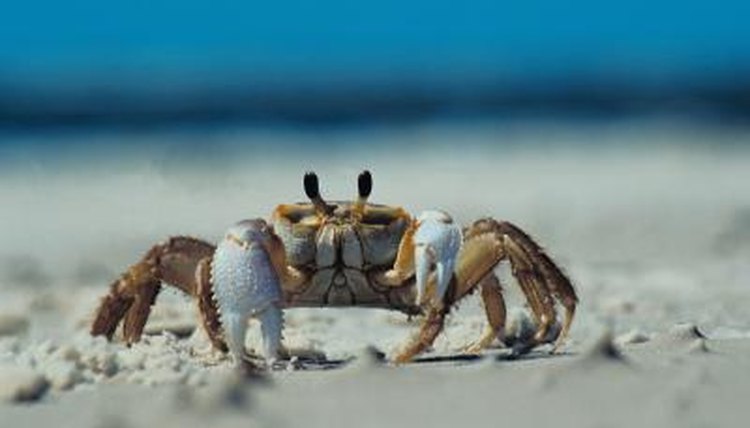
Sand crabs usually are small crustaceans the fact that bury themselves inside of the sand at the stage where the tide is available in. They use their own antennae to gather up plankton floating while in the water. Also generally known as sand fleas, because of their resemblance to a good flea, sand crabs really are excellent live baits pertaining to saltwater fishing. While live stone dust crabs are difficult to acquire in bait shops (which routinely have frozen ones, ) a shovel plus a custom-made sifting bucket mean you can catch your personal. Instructions1Mark an X at the bottom of a bucket, with forearms approximately 1 as well as 1/2 inches great, creating four semicircular quadrants to the bottom of a bucket.2Draw a rectangle over the inner wall with the bucket over every quadrant, as wide for the entire arc in the semicircle and a third often the bucket.3Drill holes from the bottom and side on the bucket, within the particular semicircles and rectangles, employing a 1/4-inch bit. Look multiple holes throughout each area, building a mesh shape, but make it a point not overlap the actual holes as combined holes will make an opening good sized enough for crabs to flee.4Walk around the shore line, from where the tide breaks, to check out V-shaped disruptions during the water as it runs into the ocean.
We only sell what we catchSo whether it’s our or our to order, it is guaranteed to be LOCAL & FRESH!Each boat in is independently owned. Combined, we catch a variety of lobster, crab, conch and more!
The Bahamas is known for its stellar beaches. With over 2,000 breathtaking islands and cays, and the clearest water on Earth, it’s no wonder visitors come here from all around to sink their toes into miles of pure white, and in some places pink, sand—the very definition of paradise. .Other Crabs.Sand fleas - actually mole crabs - rate as a favorite of many fish, particularly pompano on the beach. Snook eat them too. Sand-flea rakes are available at tackle shops in most beach communities; sieve the sand at the surf line where you spot the diminutive crabs.
At the Shack, you can buy our seafood live (we can pack it to travel up to 24 hours). We can LIVE, overnight, anywhere in the continental US at discounted Fedex rates.
Or, we can cook it for you! Picnic here overlooking the harbor, or bring it home!We also sell our cookbook, packed with our tricks for cooking the seafood we catch.
And- we sell gift certificates so your family and friends can enjoy our local seafood as a treat! Understanding the Lingo Ever wonder why they call a lobster a chicken? Lean the local species lingo!Reprinted from The Fisherman’s Table cookbook, with permission from Laura Blackwell (author) and Sean Warren (illustrator). If It’s a LobsterWhy Do They Call It a Chicken?Local lobsters are all of one species, (Homarus americanus) but there are different kinds. ‘Chickens,’ ‘culls,’ ‘bullets,’ ‘selects,’ and ‘new shells’ are all terms you will hear. The different names refer to size, number of claws, and hardness of shell.
‘Roe’ and ‘tomalley,’ will also come up in conversation. To some they are delicacies. To others, not so much. ‘Sand sacs’ and the ‘dark line running down the middle of the lobster’s tail’ are the only parts that one really shouldn’t eat. ‘The dark line running down the middle of the lobster’s tail’ is exactly what you think it is. We throw that out too.Learn the Lobster Lingo. I've heard enough!Sand Crab vs.
Rock Crab vs Jonah CrabLocal crabs aren’t ‘Deadliest Catch’ huge. They tend to be between 4-7 inches wide yielding about ¼ cup+ meat each, depending on whether or not you are an experienced ‘picker.’ Sand Crabs, Rock Crabs (aka Jonah Crabs) and Blue Crabs are all edible and reside locally, though Blue Crabs do not exist in significant numbers. RI Sand Crabs (Cancer irroratus) have coveted sweet meat and smaller claws than their rocky brothers. They are generally no more than 5 inches wide at the carapace (body). On each side of the eyes, there are nine vestigial ‘teeth’ or bumps at the edge of the shell. (See illustration, left.) They are primarily a ‘bay’ or ‘in-shore’ catch.RI Rock Crabs or Jonah Crabs (Cancer borealis) have meat that is a little less sweet than their sandy brothers, but their claws are big, making for easy picking. They can grow to be larger than 8 inches wide and prefer deeper water.
How To Catch Crabs On The Beach In Florida
The carapace edge to either side of the eyes is smooth, distinguishing it from a ‘Sand’ crab. (See illustration, left.) Many summer in-shore lobstermen fish these ‘Jonah crabs’ off-shore in winter.What's the difference between them, and which do I want? Enough about Crabs!We Have Conch Here?Surprise – Rhode Island’s waters are filled with conch!

Unlike flashier lobster and Striped Bass, conch doesn’t get much room on local restaurant menus. This could be due to the time it takes to cook (a bunch) or because they have only recently begun to be commercially fished. Local conch is important in Italian cooking (known as ‘scungilli’) and in Asian culture, often served raw. It is a chewy, lean meat, similar to the foot of a clam but completely sand free!